 how-to
Choosing High Quality Tile for Bathrooms: A Pro Guide
Last Updated: October 23, 2026
Quick Summary
Choosing high quality tile for bathrooms starts with the spec sheet, not the pattern. Look for porcelain with water absorption below 0.5%, a PEI rating of 3 or higher for busy bathroom floors, and a DCOF of 0.42 or higher on wet floors. Then verify shade and caliber codes match across every box on delivery.
- Porcelain tile has a water absorption rate below 0.5%, while regular ceramic sits higher.
- Aim for a PEI rating of 3 or above on bathroom floors in a busy household.
- Look for a DCOF of 0.42 or higher on level wet bathroom floors.
- Rectified porcelain takes tight grout joints of 1/16 to 1/8 inch.
- Order 10% extra tile for cuts and future repairs, since dye lots change.
Table of Contents
- Start With the Spec Sheet: How to Tell If Porcelain Tile Is Good Quality
- The Best Tile for Bathroom Floors: Matching Material to Wet, High-Traffic Rooms
- Bathroom Tile Slip Resistance: What the DCOF Number Tells You
- Bathroom Tile Sizes and Layout: Scale, Grout Lines, and Rectified Edges
- Inspect Before You Buy: A Quality Checklist for Tile Deliveries
- Installation Quality and Substrate Prep: Where Good Tile Goes Wrong
- Grout, Joints, and Maintenance Planning for a Bathroom That Lasts
- Conclusion
- Frequently Asked Questions
Start With the Spec Sheet: How to Tell If Porcelain Tile Is Good Quality
Choosing high quality tile for bathrooms starts with one document most shoppers never ask for: the spec sheet. We tell every homeowner the same thing before they fall in love with a pattern.
A spec sheet is the manufacturer's technical summary of a tile's absorption rate, hardness, slip rating, and size tolerance. It is the single best tool for judging quality before you buy.
Here is what to pull from it first.
Water Absorption: The 0.5% Line That Separates Porcelain From Ceramic
Water absorption is the percentage of water a tile soaks up. Porcelain sits below 0.5%, according to MSI Surfaces' guide to porcelain tile grades.
That gap matters in a bathroom. Lower absorption means less moisture inside the tile body.
Ask for the absorption number in writing. If a seller cannot produce it, that tells you something too.
Hardness, Wear, and PEI Ratings Decoded
The PEI rating is a 0-to-5 scale for surface wear resistance, set by the tile industry. Higher numbers handle more foot traffic.
For bathroom floors in a busy household, aim for PEI 3 or above. PEI 4 and 5 are built for heavy use.
But here is the part most guides miss. That is why substrate prep matters as much as the tile itself.
The Best Tile for Bathroom Floors: Matching Material to Wet, High-Traffic Rooms
The best tile for bathroom floors balances water resistance, grip, and upkeep. Porcelain wins on moisture. Natural stone wins on looks but demands sealing. Ceramic is the budget pick for low-traffic spots.
Ceramic vs. Porcelain vs. Natural Stone
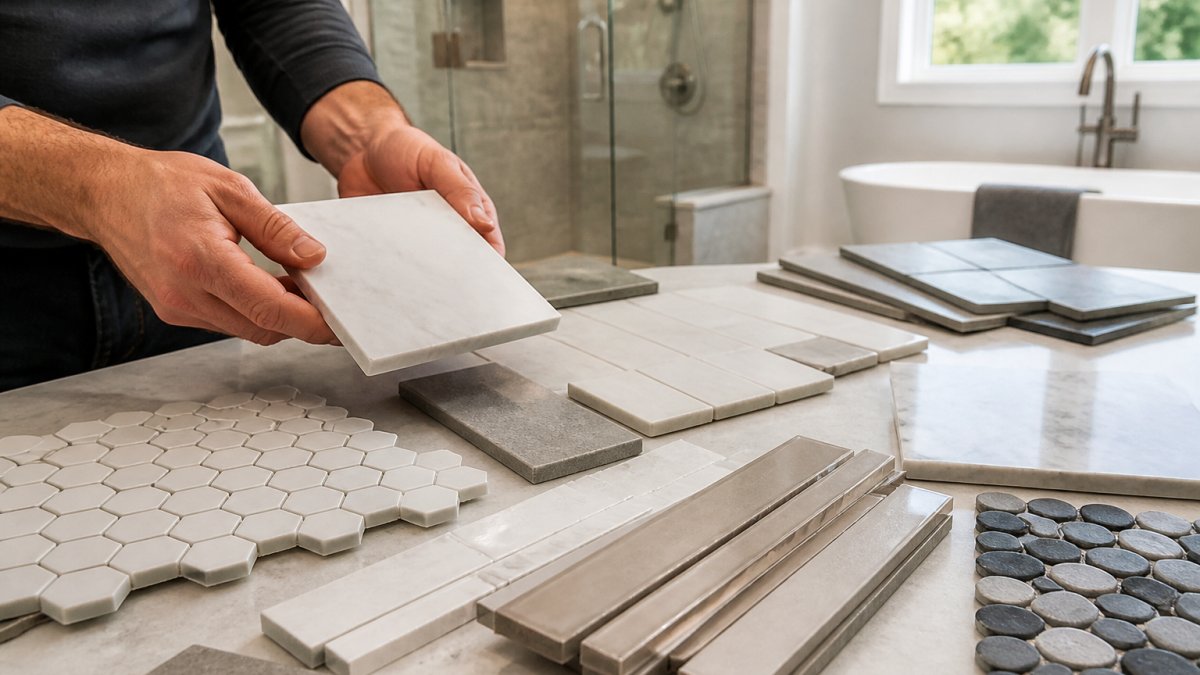
- Ceramic: Softer body, higher absorption, easiest on the wallet. Fine for walls and light-use floors.
- Porcelain: Dense, low absorption, tough. The default for wet, busy bathrooms.
- Natural stone: Travertine, limestone, and marble look rich. They need sealing and careful cleaning.
Design trends lean toward limestone- and travertine-inspired looks for 2026, per Porcelanosa's bathroom tile trend report. The good news: porcelain can mimic those looks without the sealing chore.
Large-format tile is also trending, notes Cotto d'Este's 2026 trend roundup. Lowe's points out that large tiles suit large rooms, while smaller tiles fit bathrooms well (Lowe's Tile Flooring Buying Guide).
Bathroom Tile Slip Resistance: What the DCOF Number Tells You
The DCOF (dynamic coefficient of friction) is a measured number for how much grip a tile offers when wet.
Look for a DCOF of 0.42 or higher on level wet floors. That is the threshold many specifiers use for wet areas.
Matte and honed finishes generally grip better than polished ones. Texture helps too. A little surface tooth beats a mirror shine near a shower.
Bathroom Tile Sizes and Layout: Scale, Grout Lines, and Rectified Edges
Tile size and layout change how big a bathroom feels and how easy it is to clean.
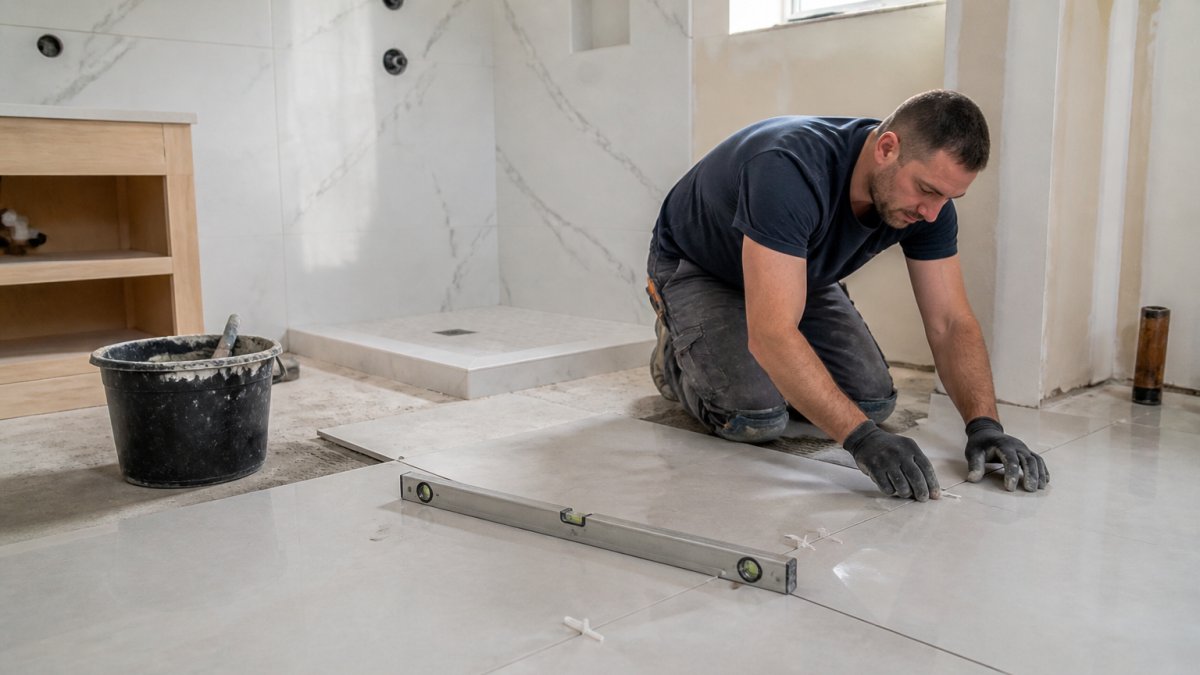
Rectified edges are cut square after firing. They allow tight, even grout joints.
Plan placement around the room's dimensions. Center the layout on the main sightline.
Joint width should follow the tile type, so match the grout line to the material before you set anything.
| Tile type | Typical joint width | Why |
|---|---|---|
| Rectified porcelain | 1/16 to 1/8 inch | Cut square after firing, takes tight joints |
| Non-rectified tile | 3/16 inch or more | Absorbs size variation, avoids lippage |
| Natural stone | 1/8 inch and up | Stone edges and thickness vary more |
Inspect Before You Buy: A Quality Checklist for Tile Deliveries
Open the boxes before installation day. Catching problems early saves a redo. Run this check on every delivery:
- Confirm the shade and caliber codes match across all boxes
- Check for chips, cracks, and corner damage
- Lay several tiles together to spot size variation
Order 10% extra for cuts and future repairs. Dye lots change, and a later match is never guaranteed.
Installation Quality and Substrate Prep: Where Good Tile Goes Wrong
Even premium tile fails on a bad substrate. Substrate prep means getting the surface flat, stable, clean, and, in wet areas, waterproof before the first tile goes down. This is the step most homeowners never see and most failed bathrooms can be traced back to.
Flatness and Deflection: The Two Checks That Prevent Lippage and Cracks
A common mistake is skipping a flatness check. Most tile manufacturers publish a substrate flatness tolerance in their installation instructions, often 1/8 inch in 10 feet for large-format tile, and 1/4 inch in 10 feet for smaller formats.
Deflection matters just as much. A floor that flexes under load will crack tile and grout no matter how good the tile is.
Waterproofing: The Layer You Never See
In a shower, a tub surround, or any wet floor, waterproofing is not optional. Two approaches dominate:
- Sheet-applied membranes: A bonded waterproof sheet (often a fabric-and-polymer roll) applied over the substrate with thinset, with seams overlapped and sealed per the manufacturer's instructions.
- Liquid-applied membranes: A trowel- or roller-applied coating built up in multiple coats to a specified dry-film thickness, with reinforcing fabric at corners and changes of plane.
Either system only works if it is continuous and if it ties into the drain assembly correctly. A common failure pattern is a membrane that stops short of the drain flange or is punctured by fasteners after installation. Once tile is down, that mistake is invisible until water finds it.
Slope to Drain: Why a Level Shower Floor Is a Defect
A shower floor must slope to the drain, typically about 1/4 inch per foot, so water does not pool. A perfectly level pan looks fine on installation day and becomes a mold and efflorescence problem within a year. The slope is built into the mortar bed or the prefabricated pan, not created by the tile itself. Check it before tile goes down, not after.
Mortar, Trowel Size, and Coverage
Use the right mortar and the right trowel size for the tile. Large-format tile needs near-full coverage underneath, the industry benchmark is typically 95% coverage for wet areas and exterior applications, and 80% for dry interior floors.
Mortar choice matters too. Modified thinset is common for porcelain and glass; unmodified may be specified over some membranes and substrates.
Movement Joints: The Detail That Prevents Tenting
Tile expands and contracts with temperature and moisture. Skipping movement joints invites tenting, where tiles lift at the center of a field and pop loose, and cracked grout lines. Movement joints belong at the perimeter, at changes of plane, and at intervals across large fields, per the tile industry's installation standards. They are cheap to install and expensive to retrofit.
A beautiful tile floor is a flat, dry, and stable floor first.
Grout, Joints, and Maintenance Planning for a Bathroom That Lasts
Grout is where bathrooms age fastest. Plan it like a system, joint width, grout type, tile edge, and cleaning routine all interact, not as an afterthought once the tile is set.
Joint Width: Match the Grout Line to the Tile
Joint width is not purely aesthetic. It affects how well grout performs and how forgiving the installation is.
- Rectified porcelain is cut square after firing, so it can take tight joints, commonly 1/16 to 1/8 inch, for a clean, modern look.
- Non-rectified tile varies slightly in size from piece to piece, so it needs wider joints, often 3/16 inch or more, to absorb that variation and avoid lippage.
- Natural stone typically calls for wider joints (1/8 inch and up) because stone edges and thickness vary more.
A joint that is too narrow for the tile type shows every size variation. A joint that is too wide for the look you want can dominate the design. The right width is the one the tile and grout manufacturers both support.
Grout Type: Cementitious vs. Epoxy vs. High-Performance Cement
- Cementitious grout is the traditional choice. It is affordable and widely available, but it is porous and benefits from sealing, especially in showers and on floors.
- Epoxy grout resists stains and moisture better than cement grout and does not need sealing. It is tougher to install, it sets fast and demands clean technique, which is why labor cost runs higher.
- High-performance cement grout (often marketed as single-component or pre-mixed) sits between the two: easier to install than epoxy, more stain-resistant than traditional cement grout.
For a shower floor or a busy family bathroom, epoxy or a high-performance cement grout is often worth the extra cost. For a low-traffic powder room, traditional cement grout with a sealer is usually sufficient.
Sealing: What Needs It and What Does Not
Porcelain tile itself does not need sealing. Natural stone usually does, travertine, limestone, and marble are porous and stain-prone without a penetrating sealer. Cement grout benefits from sealing; epoxy grout does not. Reapply sealer on the manufacturer's schedule, and reseal stone more often in wet areas.
Cleaning: Gentle Beats Aggressive
Harsh acids etch grout and stone and can dull glazed tile. A pH-neutral cleaner and a soft brush handle most bathroom soils. For mold, the fix is ventilation and moisture control first, run the exhaust fan during and after showers, wipe down wet walls, and fix leaks fast. A simple yearly grout check catches small cracks and missing sealant before they spread.
We plan grout and joints before the first tile is set, so the finished bathroom holds up to daily use instead of showing its age within a year.
Conclusion
The hardest part of choosing high quality tile for bathrooms is not picking a pretty pattern.
That is where J Curran Home Services comes in. We handle full bathroom renovations with careful prep, skilled tiling, and reliable scheduling.
Get an estimate from J Curran Home Services and start your bathroom with a floor built to last.
Frequently Asked Questions
What is the best kind of tile for a bathroom?
Porcelain is the strongest all-around pick for most bathrooms. It absorbs less than 0.5% water, according to MSI Surfaces, so it holds up in showers and wet areas better than standard ceramic. For floors, choose a matte or textured porcelain with a DCOF of 0.42 or higher to reduce slipping. Natural stone looks great but needs sealing and more upkeep. Match the material to the room: porcelain for wet zones, ceramic for low-traffic walls, and stone only if you accept the maintenance.
How can I tell if porcelain tile is good quality before I buy?
Ask for the spec sheet and check three numbers: water absorption (under 0.5% for true porcelain), the PEI wear rating (3 or higher for residential floors), and the DCOF slip rating (0.42 or higher for wet floors). Look at the tile itself for consistent color and thickness, square edges, and no chipping. Rectified edges signal tighter manufacturing tolerances. Order a sample, wet it, and walk on it in shoes and bare feet before committing to a full order.
What tile is safest for a bathroom floor?
Matte or textured porcelain with a DCOF of 0.42 or higher is the safest common choice for bathroom floors. Glossy and polished tiles look sleek but get slick when wet, so keep those on walls. Smaller tiles with more grout lines add grip because grout gives feet something to catch. If the bathroom serves older adults or kids, prioritize texture over shine and skip highly polished stone on the floor entirely.
Should I use large-format tile in a small bathroom?
Large-format tile is a 2026 trend, but Lowe's notes large tiles work best in larger rooms while small tiles suit bathrooms. In a small bathroom, oversized tiles mean fewer grout lines and a cleaner look, but they waste more material on cuts and need a very flat substrate. A 12x24 inch tile is a practical middle ground: fewer joints than mosaic, easier to fit around a tub or vanity. Plan the layout before you buy so cut pieces land in less visible spots.