 ultimate-guide
Bathroom Remodeling Design Trends 2026: A Guide
Table of Contents
- What's Driving Bathroom Remodeling Design Trends in 2026
- Spa-Inspired and Wellness-Focused Bathroom Design
- Modern Bathroom Tile Trends 2026: Shapes, Patterns, and Finishes
- Natural Stone and Organic Material Finishes
- Small Bathroom Renovation Ideas 2026: Maximizing Space and Style
- Sustainable Bathroom Design Practices for Long-Term Value
- Bathroom Remodel Cost Estimator 2026: Budget Planning and ROI
- Design Trends to Avoid and Timeless Alternatives
- Frequently Asked Questions
Last Updated: October 2, 2026
What's Driving Bathroom Remodeling Design Trends in 2026
The residential remodeling market is booming. According to Terrafez's 2026 bathroom remodeling report, the United States spent $522 billion on home remodeling in 2026, with bathrooms representing a significant portion of that investment. What's remarkable is how homeowners' priorities have shifted. This year's bathroom remodeling design trends reflect a fundamental change in what people want from their spaces: comfort, intentionality, and long-term value rather than just visual trends.
The median cost for a primary bathroom remodel sits at $15,000, and here's what matters most: midrange projects deliver an 80% return on investment. That's substantial. But the real story isn't the dollars, it's what homeowners are actually choosing to change. According to Houzz's 2026 renovation scope survey, 40% of homeowners rework their bathroom layout entirely, while 38% modify walls. Only a fraction change ceilings or floors. This tells you where the focus is: structural, functional changes that fundamentally reshape how the space works.
The trends aren't random, they're driven by three core forces: a return to natural, authentic materials; a wellness-first mentality that treats bathrooms as personal sanctuaries; and a practical emphasis on aging-in-place design that works for families across decades, not just today.
Spa-Inspired and Wellness-Focused Bathroom Design
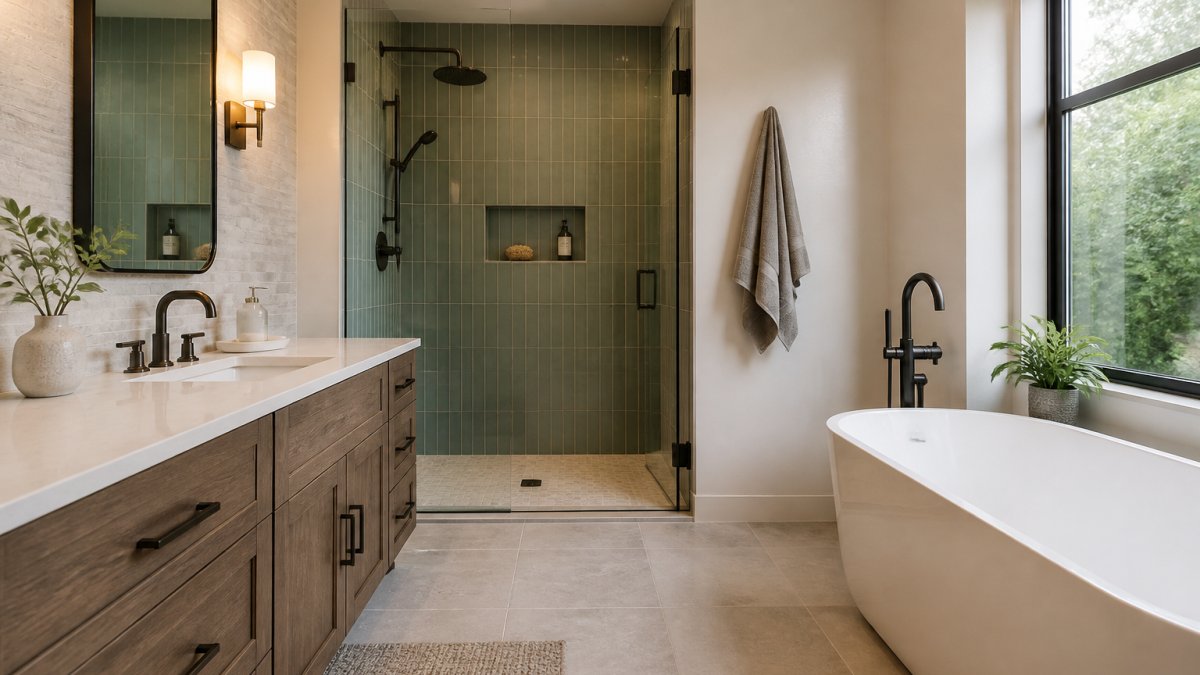
A spa-like sanctuary isn't a luxury anymore, it's a baseline expectation. Homeowners are prioritizing larger showers and curbless entries that feel open and accessible. Walk-in showers dominate the remodeling landscape because they deliver both aesthetic appeal and practical accessibility. The shift toward wellness-focused layouts means rethinking the entire bathroom as a retreat space, not just a functional room.
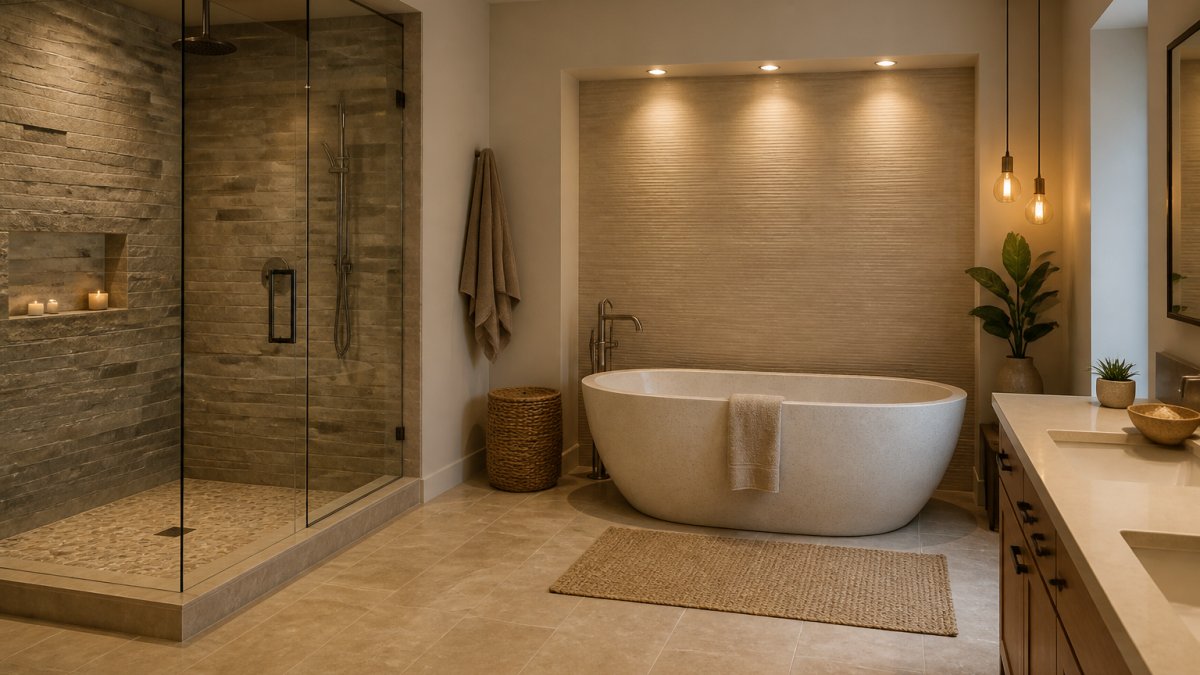
Natural stone plays a starring role here. Limestone, marble, and slate create tactile surfaces that feel intentional, the opposite of sterile minimalism. Porcelanosa's 2026 trend analysis highlights the resurgence of untreated natural finishes and handmade materials that bring warmth back into bathroom spaces. This isn't about luxury pricing; it's about choosing materials that age beautifully and feel genuine.
The wellness angle extends to lighting. Sculptural, oversized light fixtures are gaining traction because they transform the bathroom from a purely functional space into one designed for ritual. Soft ambient lighting paired with task lighting creates layers that work for early mornings and evening wind-downs. Smart home integration is also becoming standard, heated floors, chromotherapy showers, and automated lighting that adjusts to circadian rhythms aren't novelties anymore.
:::pro-tip Walk-in showers with curbless entries require proper slope and drainage planning. Work with a contractor experienced in bathroom remodeling design to avoid water damage issues that emerge months after installation. The slope must be subtle enough to feel seamless but steep enough to function reliably.
Modern Bathroom Tile Trends 2026: Shapes, Patterns, and Finishes
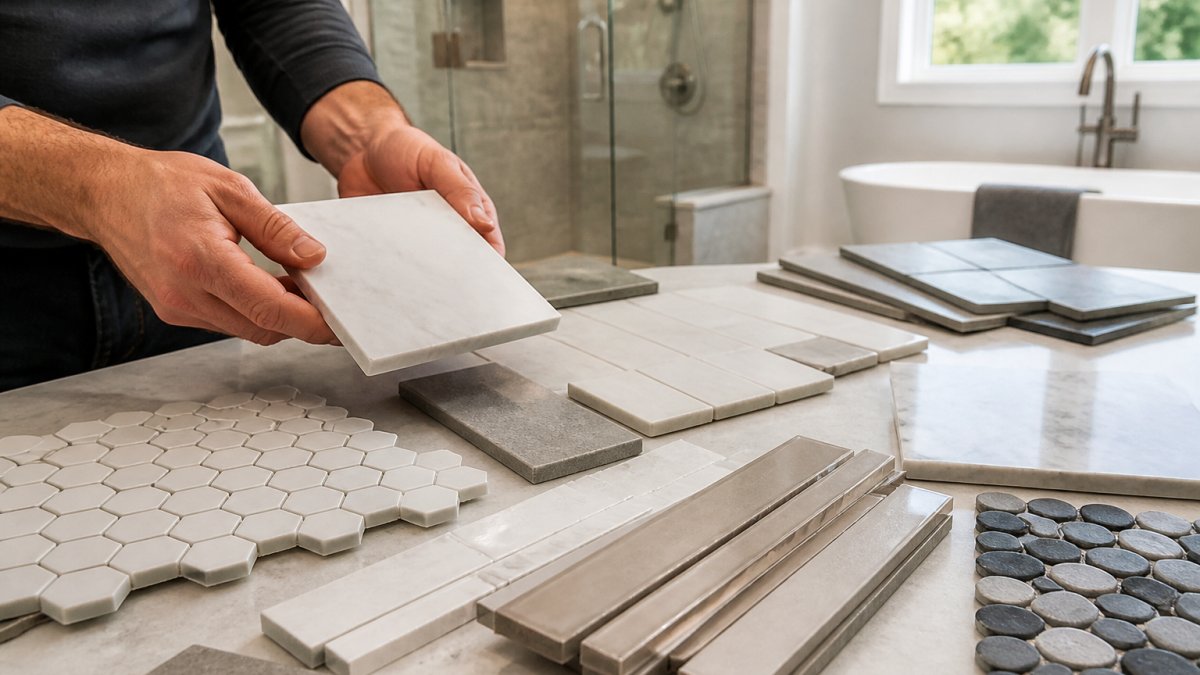
Tile preferences have shifted dramatically. According to Sweeten's 2026 bathroom trends study, rectangular tiles lead at 29%, followed by hexagonal (26%), square (22%), and horizontally stacked tiles (18%). The pattern matters because it signals design intent. Rectangular tiles create clean lines and modern aesthetics. Hexagonal tiles feel more playful and organic. Horizontally stacked tiles add movement and visual interest without overwhelming the space.
What's disappeared: stark white subway tile in endless repetition. What's arrived: tile drenching, applying tile across multiple surfaces including walls, ceilings, and even accents. This creates cohesion and transforms tile from a functional surface into a design statement. Matte finishes dominate over glossy because they feel more intentional and hide water spots better.
Pattern and texture matter more than ever. Handmade tiles with slight variations, natural stone mosaics, and geometric patterns that reference Japandi design (a blend of Japanese and Scandinavian aesthetics) are gaining ground. The goal is visual interest that doesn't scream "trendy." Microcement finishes, smooth, monolithic coatings that can be applied over tile, are emerging as a way to create seamless, spa-like surfaces.
Natural Stone and Organic Material Finishes
Minimalism's grip on design is loosening. Designers and homeowners are returning to natural, untreated materials that show their age and character. Stone, limestone, marble, slate, granite, dominates bathroom remodeling design conversations because it delivers authenticity that manufactured materials can't replicate.
The appeal is straightforward: natural stone ages beautifully. It patinas, it develops character, and it signals intentionality. A marble vanity top or limestone shower surround becomes part of your home's story, not a trend you'll regret in five years. Organic textures, rough-hewn stone, textured wood accents, handmade ceramics, create contrast against clean lines and modern fixtures.
This shift away from stealth wealth aesthetics (the quiet luxury of understated everything) toward what some call "intentional abundance" means choosing materials that announce themselves. A statement stone wall, textured tile work, or sculptural lighting fixture says "this was chosen deliberately." It's the opposite of the floating vanity, stark white palette, and black hardware that Forbes identified as trends losing favor in 2026.
Sustainability matters here too. Natural stone is durable, a marble countertop can last decades with proper sealing. Wood accents from sustainable sources add warmth without the environmental guilt. This isn't performative sustainability; it's practical longevity that reduces waste.
Small Bathroom Renovation Ideas 2026: Maximizing Space and Style
Not every bathroom remodel involves knocking down walls. Small bathrooms require different thinking, and 2026's trends actually favor smaller spaces because they emphasize intentional design over square footage.
Vertical storage is non-negotiable.
Sustainable Bathroom Design Practices for Long-Term Value
Sustainability in bathroom remodeling design isn't just environmental, it's financial. Durable materials and water-efficient fixtures reduce long-term costs and align with how homeowners actually want to live.
Bathroom Remodel Cost Estimator 2026: Budget Planning and ROI
The median cost of $15,000 for a primary bathroom remodel is a useful benchmark, but it masks enormous variation. A small bathroom renovation might run $5,000-$8,000. A luxury primary bath can exceed $30,000. Understanding what drives cost helps you make smarter decisions.
| Budget Category | Percentage of Total | Priority Level |
|---|---|---|
| Labor | 40-50% | Critical |
| Materials (tile, fixtures, vanity) | 30-40% | Critical |
| Contingency | 10-15% | Non-negotiable |
| Design/consultation | 5-10% | Important |
| Permits/inspections | 2-5% | Required |
Design Trends to Avoid and Timeless Alternatives
Minimalism's reign is ending. Floating vanities, stark white color palettes, black hardware, and wet room concepts dominated 2024-2025. In 2026, they're identified as trends losing favor because they sacrifice storage and personality for aesthetic purity. The backlash isn't subtle.
Frequently Asked Questions
What are the top bathroom design trends for 2026?
The leading bathroom remodeling design trends for 2026 include spa-inspired layouts with walk-in showers, natural stone and organic material finishes, microcement surfaces, and wellness-focused features. Rectangular tiles remain the most popular choice at 29%, followed by hexagonal at 26%. Smart home integration, sustainable materials, and aging-in-place accessibility features are also gaining momentum as homeowners prioritize comfort and functionality alongside aesthetics.
How much should I budget for a bathroom remodel in 2026?
The median cost for a primary bathroom remodel in 2026 is $15,000, with midrange projects yielding an 80% return on investment. However, costs vary based on scope: 40% of homeowners rework the bathroom layout, 38% modify walls, and 9% change the ceiling. For an accurate budget specific to your project, it's best to get a detailed estimate from a professional contractor.
Are floating vanities still popular in 2026, or are they going out of style?
Floating vanities are identified as design trends losing favor in 2026. Homeowners are increasingly prioritizing storage capacity and practical functionality over minimalist aesthetics. Instead, designers are recommending bespoke cabinetry and vanities with substantial storage solutions. This shift reflects a broader move away from stark white tones and minimal hardware toward more intentional, textured designs that combine style with everyday usability.
What sustainable bathroom design practices should I consider?
Sustainable bathroom design practices for 2026 focus on water-efficient fixtures, eco-friendly materials, and durable finishes that reduce long-term replacement needs. Choose certified sustainable materials like reclaimed wood or responsibly sourced natural stone. Install low-flow showerheads and faucets to reduce water consumption. Microcement and other long-lasting finishes minimize waste from frequent updates. These practices not only reduce environmental impact but also lower utility costs and align with the growing consumer preference for intentional, responsible design choices.
Can a small bathroom be renovated with 2026 design trends?
Yes. Small bathrooms benefit from several 2026 trends: walk-in showers with curbless entries create the illusion of space, light-colored natural stone and microcement finishes make rooms feel larger, and sculptural lighting fixtures add visual interest without bulk. Maximize storage with bespoke cabinetry, use rectangular tiles (29% of homeowners' choice) in horizontal patterns to elongate the space, and incorporate backlit mirrors for ambient lighting. Strategic use of tile drenching on one accent wall adds texture without overwhelming a compact layout.
What tile shapes and patterns are most popular for bathrooms in 2026?
Rectangular tiles dominate at 29%, followed by hexagonal at 26% and square at 22%. Horizontally stacked rectangular tiles account for 18% of bathroom renovations and are particularly effective in small spaces. Tile drenching, applying tile across multiple surfaces like walls and even ceilings, is a rising trend. Textural contrast through matte finishes and natural stone patterns is preferred over uniform, glossy surfaces, reflecting the shift toward organic, intentional design aesthetics.
When is the best time to schedule a bathroom remodel?
According to 2026 industry data, 35% of bathroom remodels are completed between April and June, making spring the peak season. However, scheduling during off-peak months (late fall or winter) may offer more contractor availability and potentially faster project timelines. Consider your timeline flexibility: peak season ensures quick completion but may involve longer wait times for scheduling, while off-peak periods offer scheduling convenience. Discuss timing with your contractor to align with your needs and their availability.