 blog
Quality Kitchen Cabinet Installation Services
Table of Contents
- What Makes Quality Kitchen Cabinet Installation Services Stand Out
- Average Cost to Install Kitchen Cabinets
- Kitchen Cabinet Installation Timeline: What to Expect
- Professional Installation vs. DIY: A Cost-Benefit Analysis
- Cabinet Installation Checklist for Your Project
- Cabinet Material Durability and Installation Considerations
- How to Choose the Right Cabinet Installation Contractor
- Frequently Asked Questions
Last Updated: September 28, 2026
What Makes Quality Kitchen Cabinet Installation Services Stand Out
The difference between a kitchen that lasts five years and one that lasts twenty comes down to installation quality, not the cabinets themselves.
Nearly half of renovating homeowners now prioritize hiring an experienced installer, according to CKF Co.'s 2026 analysis of kitchen cabinet preferences. They've learned the hard way that even premium cabinetry fails when installation cuts corners.
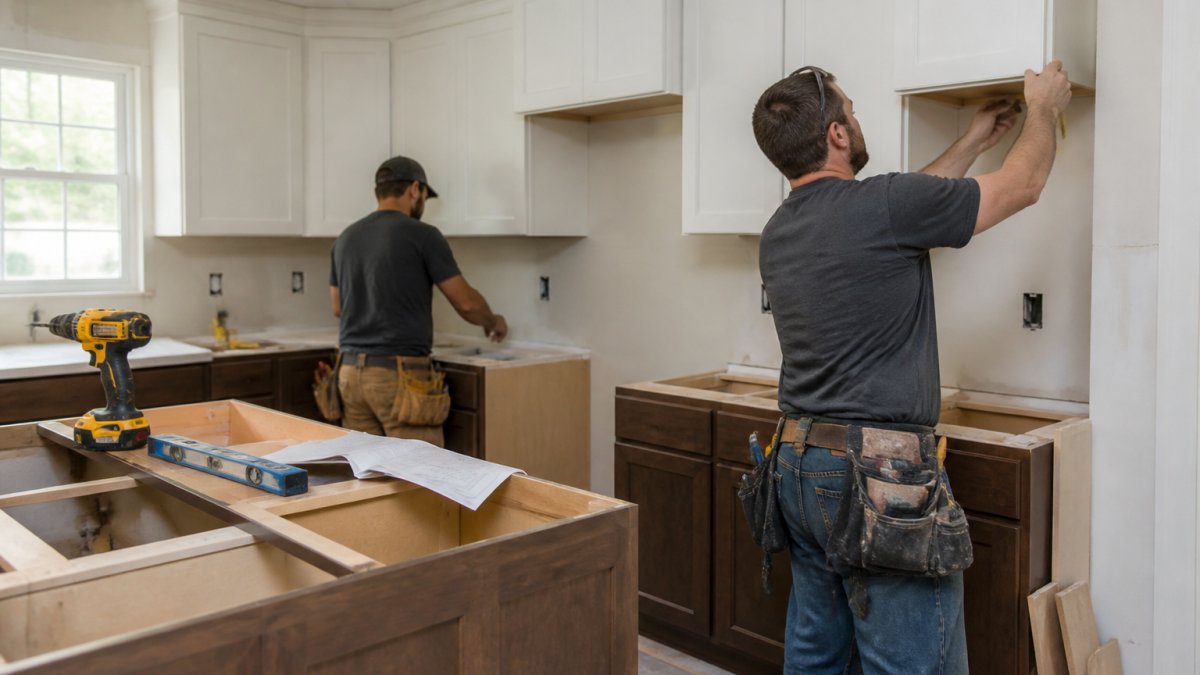
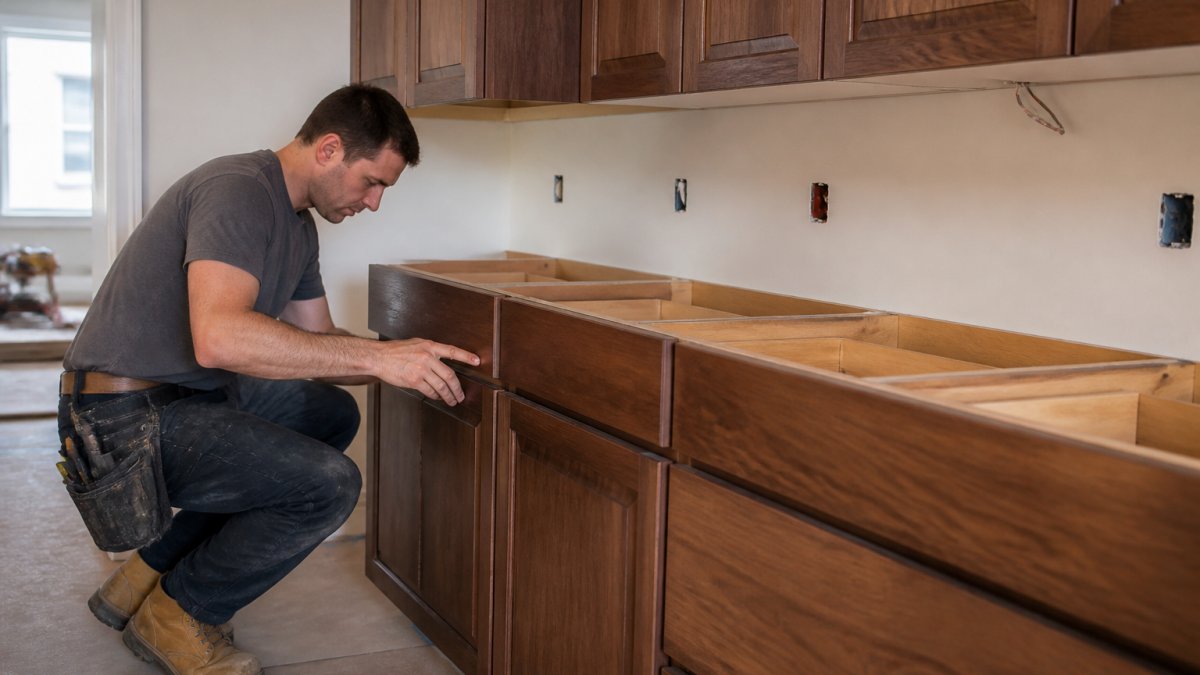
Quality kitchen cabinet installation services require precision leveling, proper shimming, secure fastening to studs, and alignment that keeps working smoothly for years. Professional installers handle out-of-square walls, uneven floors, and hidden challenges that DIY attempts expose too late.
Poor installation costs appear later: doors that won't close evenly, binding drawers, and premature hardware wear. Fixes then cost as much as doing it right initially.
Average Cost to Install Kitchen Cabinets
Kitchen cabinet installation pricing depends on cabinet type, linear footage, complexity, and location. Understanding these factors helps you budget and compare quotes fairly.
Stock and semi-custom cabinets typically cost between $100 and $650 per linear foot for installation, according to HomeLight's 2026 cost analysis. For a standard 10-by-12-foot kitchen, that translates to roughly $2,000 to $13,000 in total installation costs. Professional labor alone ranges from $50 to $300 per linear foot, or $40 to $80 per hour depending on project complexity and your region.
Simple layouts with straight runs sit at the lower end. Complex jobs with custom trim-work, islands, structural modifications, or intricate finishing push costs higher, with specialized providers reporting $274 to $422 per linear foot for detailed work.
The total project cost typically spans $4,000 to $32,000 depending on cabinet tier, according to SimplyWise's 2026 project cost breakdown. Stock cabinets with straightforward installation land in the lower range. Custom cabinetry with extensive trim-work and high-end finishes occupy the upper end.
Kitchen Cabinet Installation Timeline: What to Expect
Most homeowners underestimate installation time. A typical kitchen cabinet installation spans two to five days, but the full project timeline, including prep, measurements, ordering, and finishing, extends much longer.
Measurement and design takes one to two weeks. Ordering and manufacturing adds four to eight weeks for semi-custom or custom cabinets; stock cabinets arrive in one to two weeks. Actual installation, removing old cabinets, preparing walls, installing new cabinetry, and finishing, requires three to five working days.
Hidden issues stretch timelines: wall framing problems, structural damage, plumbing or electrical conflicts, and out-of-square conditions. Professional contractors build buffer time; rushed installations that skip these steps save days but cost years of reliability.
Coordinating multiple trades, electricians, plumbers, tile specialists, extends the timeline but prevents costly mistakes and rework. Homeowners who hire a general contractor to manage trades report smoother timelines than those coordinating separately.
Professional Installation vs. DIY: A Cost-Benefit Analysis
This is where the math gets interesting, and where most homeowners underestimate the true cost of DIY.
The Upfront Labor Comparison
Professional installation costs $50 to $300 per linear foot in labor, roughly $600 to $3,600 for a 10-by-12-foot kitchen. DIY saves that upfront, but the real cost emerges when factoring in tools, mistakes, and fixes.
Tools and Equipment You'll Need
Professional installers use specialized equipment: laser levels (1/8-inch accuracy), stud finders, nailers, shims, saws, drills, levels, and alignment jigs. Renting or buying these costs $300 to $800. Using them correctly requires experience; untrained use produces false readings and causes problems months later.
The Cost of Specific Failures
Common DIY failures and repair costs:
-
Misaligned doors and drawers: Fixing costs $200 to $600 per cabinet professionally, or 8 to 16 hours of your time.
-
Cabinets pulling away from walls: Improper fastening causes separation within months. Fixing requires removing countertops, re-fastening to studs, and reinstalling. Cost: $1,500 to $4,000 for a full run.
-
Water damage from poor countertop integration: Gaps allow water to seep behind cabinets, causing swelling, delamination, mold, and subfloor rot. Remediation costs $3,000 to $8,000+.
-
Sagging shelves and structural failure: Fixing costs $400 to $1,200 per cabinet; replacement is often cheaper if the box is damaged.
-
Hardware wear and premature failure: Incorrect installation causes wear in 6 to 18 months instead of 10+ years. Replacing hardware on a full kitchen costs $800 to $2,000.
The Hidden Time Cost
Professional installation takes 3 to 5 working days. DIY takes 2 to 3 weeks of evenings and weekends, or 4 to 8 weeks if problems emerge. During this time, your kitchen is unusable, a real cost in convenience and stress.
When DIY Makes Sense
DIY is viable only if: (1) stock cabinets in a simple, square kitchen with straight runs and no structural issues; (2) cabinet refacing or hardware replacement on existing cabinets; or (3) you have carpentry experience and professional-grade tools.
The Real Decision Framework
Professional labor ($600 to $3,600) is insurance against one major failure ($1,500 to $8,000). The upfront investment protects your cabinetry, countertops, flooring, and substructure for 15 to 25 years.
Cabinet Installation Checklist for Your Project
A well-managed installation follows a clear sequence. This checklist helps you track progress and ensure nothing gets overlooked.
| Phase | Key Steps | Timeline |
|---|---|---|
| Pre-Installation | Wall prep, measurements confirmed, utilities marked | 1-2 weeks before |
| Day 1 | Remove old cabinets, patch walls, level and mark stud locations | First day |
| Day 2-3 | Install base cabinets, ensure level and alignment | Days 2-3 |
| Day 4 | Install wall cabinets, verify alignment and secure fastening | Day 4 |
| Day 5 | Install hardware, doors, drawers, and finishing trim-work | Day 5 |
| Post-Installation | Countertop and backsplash integration, final inspection | 1-2 weeks after |
Before installation, confirm walls are prepared, old cabinets removed, walls patched and primed, and utilities marked. During installation, verify floor level and wall plumb; shim out-of-square conditions; fasten to studs; align doors and hinges; level drawer slides. After installation, integrate countertops and backsplash, then inspect that doors and drawers operate smoothly and hardware is secure.
Cabinet Material Durability and Installation Considerations
Not all cabinets are built the same, and installation approaches differ significantly based on material, construction quality, and environmental conditions. Understanding these differences helps you choose the right cabinet type for your kitchen and ensures your installer uses the correct techniques.
Solid Wood Cabinets: Movement and Precision
Solid wood cabinets demand precise installation because wood expands and contracts with humidity. A 24-inch cabinet can shift up to 1/4 inch seasonally, normal movement that installation must accommodate.
Proper installation accounts for movement by: shimming flexibly to allow slight movement without binding; fastening to studs 16 inches apart with screws (not nails); carefully aligning doors and hinges for seasonal adjustment; and protecting finishes by ensuring tight integration with countertops and backsplash (gaps larger than 1/8 inch allow water infiltration).
Properly installed solid wood cabinets last 20 to 30 years; poorly installed ones show failure within 2 to 5 years.
Plywood-Based Cabinets: Stability and Support
Plywood cabinets are more dimensionally stable than solid wood but require solid backing and proper fastening because the boxes are heavier and veneer finishes are sensitive to damage.
Installation requires: fastening directly to studs with 2.5-inch screws spaced 16 inches apart (drywall anchors will fail); protecting veneer with tape during moves; leveling drawer slides to within 1/8 inch; and sealing all edges and joints to prevent water infiltration.
Properly installed plywood cabinets last 15 to 20 years; damaged veneer or water infiltration reduces durability to 5 to 10 years.
Laminate and Thermofoil Cabinets: Moisture and Heat Resistance
Laminate and thermofoil cabinets are durable, affordable, and moisture-resistant but have specific installation requirements and failure modes.
Sustainable and Recycled-Content Cabinets: Emerging Materials
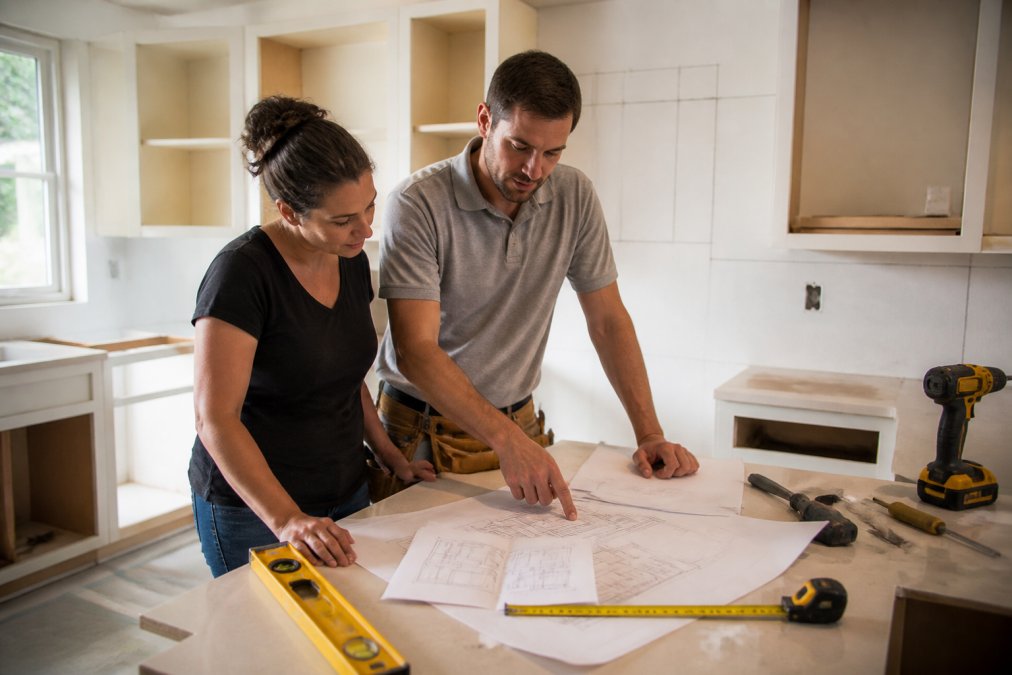
How to Choose the Right Cabinet Installation Contractor
This decision shapes your entire kitchen renovation. The wrong contractor creates problems that haunt you for years.
Frequently Asked Questions
How much does professional kitchen cabinet installation cost?
Professional kitchen cabinet installation ranges from $100 to $650 per linear foot for labor and materials combined, with total project costs typically between $2,000 and $13,000. Labor alone runs $40 to $80 per hour or $50 to $300 per linear foot depending on project complexity and location. Costs vary significantly by cabinet tier, stock, semi-custom, or custom, and specific installation requirements. Contact J Curran Home Services for a detailed quote based on your kitchen's dimensions and cabinet specifications.
How long does it take to install kitchen cabinets?
Kitchen cabinet installation timelines depend on project scope, kitchen size, and complexity. Standard installations for a typical kitchen typically take 1-3 weeks from start to finish, though this varies based on whether walls require leveling, electrical or plumbing modifications are needed, or custom trim-work is involved. Delays can occur if structural issues are discovered during installation. A professional contractor will provide a detailed timeline during your estimate and manage scheduling to keep the project on track.
Is it worth hiring a professional for cabinet installation?
Yes. Professionals handle critical tasks like wall leveling, shimming, door alignment, and soft-close hinge installation that DIY attempts often botch. Poor installation can damage cabinets, create structural issues, and void warranties. Professional installers also coordinate with other trades, electricians, plumbers, tile crews, reducing your stress and preventing costly mistakes that exceed the cost of hiring an expert.
What should I look for in a cabinet installation contractor?
Choose a licensed and insured contractor with proven experience in kitchen remodeling. Review customer testimonials and verify their work quality through before-and-after photos. Confirm they handle the full scope: cabinet placement, countertop integration, backsplash coordination, hardware installation, and trim-work. Ask about their process for discovering hidden structural issues and how they handle cost overruns. A trustworthy contractor will provide written estimates, detailed project timelines, and guarantees on workmanship.