 blog
Best Kitchen Renovation Contractors in Camden County
Table of Contents
- What Makes the Best Kitchen Renovation Contractors in Camden County Stand Out
- How to Compare Kitchen Renovation Contractors: Selection Criteria That Matter
- Kitchen Renovation Cost: What Drives Your Project Estimate
- Questions to Ask a Kitchen Contractor Before You Sign
- Kitchen Remodel Timeline: How Long Your Project Should Take
- Kitchen Contractor Red Flags That Should End the Conversation
- Why J Curran Home Services Belongs on Your Contractor Shortlist
- Conclusion: Hiring Kitchen Renovation Contractors in Camden County With Confidence
- Frequently Asked Questions
Last Updated: October 10, 2026
What Makes the Best Kitchen Renovation Contractors in Camden County Stand Out
The best kitchen renovation contractors in Camden County separate themselves through verified licensing, transparent pricing, and a documented process for handling the surprises hidden behind old walls.
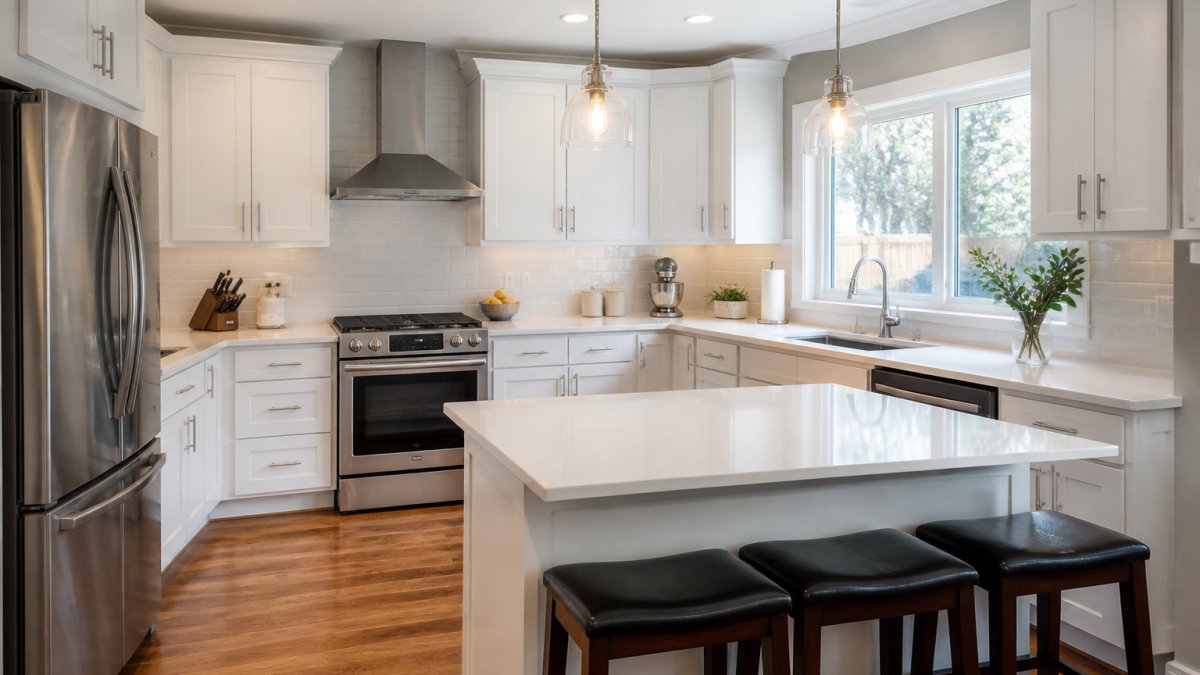
What separates the top-reviewed remodelers from the rest comes down to three things: they pull permits correctly, they carry proper insurance, and they communicate before you have to chase them.
Here's the part most homeowners learn too late: the lowest bid usually wins the job and loses the project. The contractor search should start with credentials, not price.
How to Compare Kitchen Renovation Contractors: Selection Criteria That Matter
Comparing contractors on price alone is the fastest way to end up with a half-finished kitchen. The right comparison weighs licensing, insurance, review patterns, and how each contractor handles change orders. A kitchen renovation contractor is a licensed professional who manages design, permits, tradespeople, and construction timelines for residential kitchen projects.
Build a shortlist of three to four local contractors, then score each one against the same criteria.
| Criteria | What to Check | Why It Matters |
|---|---|---|
| Licensing | State registration status | Unlicensed work complicates permits and resale |
| Insurance | Liability and workers' comp certificates | Protects you if someone is injured on site |
| Reviews | Patterns, not just star ratings | Repeated complaints reveal real problems |
| Permits | Who pulls them and how | Unpermitted work can fail inspection later |
| Change orders | Written process and approval flow | Prevents surprise costs mid-project |
Licensing, Insurance, and Permit Checks in New Jersey
New Jersey requires home improvement contractors to register with the state Division of Consumer Affairs, and you can verify a contractor's status through the New Jersey Division of Consumer Affairs contractor registration lookup.
Permits fall to the contractor in a well-run project. Electrical, plumbing, and structural changes all require municipal permits in most Camden County towns, and the contractor should handle the filing and inspections.
Review Verification and Customer Satisfaction Signals
Read reviews for patterns, not scores. A contractor with a 4.6 average and detailed complaints about scheduling tells you more than a 4.9 with ten generic five-star entries. Look for reviews that mention specific project types, timelines, and how problems were resolved. Verified reviewers on platforms like the Better Business Bureau tend to be more reliable than anonymous testimonials on a contractor's own site.
Kitchen Renovation Cost: What Drives Your Project Estimate
Kitchen renovation cost depends on scope, materials, and how much structural work hides behind your existing walls. Because pricing varies so widely by project, we recommend getting itemized estimates rather than lump-sum quotes, so you can see exactly what each line covers. What most directory listings never tell you is what the numbers actually look like, so here is a realistic framework for budgeting a kitchen.
Typical Budget Tiers
Most homeowners land in one of three tiers. Your actual numbers depend on cabinet grade, countertop material, and whether walls move.
| Tier | Scope | Typical Range |
|---|---|---|
| Cosmetic refresh | Paint, hardware, new appliances, refaced or painted cabinets, same layout | Lower five figures |
| Mid-range remodel | New semi-custom cabinets, quartz or granite counters, new flooring, minor electrical | Mid five figures |
| Full gut with layout change | Custom cabinetry, moved plumbing or gas, structural work, all-new finishes | Upper five figures and up |
The Line Items That Move the Number
- Cabinets. The single largest line in most budgets. Stock cabinets cost the least, semi-custom sits in the middle, and full custom is the top of the range. Refacing or painting existing boxes is the cheapest option, but only when the boxes are square and solid.
- Countertops. Laminate is the budget floor, quartz and granite sit mid-range, and natural stone slabs with complex edge profiles push higher. Fabrication and templating are separate line items from the slab itself.
- Labor. Demolition, carpentry, tile, electrical, and plumbing each carry their own labor cost. A contractor who manages trades directly typically bundles this; one who subs everything out may pass through markup.
- Plumbing and electrical relocation. Keeping the sink, range, and refrigerator in place avoids this entirely. Moving any of them adds rough-in work, permits, and inspection cycles.
Why Itemized Estimates Beat Lump Sums
An itemized estimate lets you compare bids fairly, spot where a competitor is cutting corners, and decide where to upgrade or downgrade without renegotiating the whole job. It also protects you at change-order time: when the scope shifts, you already know the unit cost of the affected line.
Local Factors That Shift the Number
Housing age is the biggest local variable. Pre-1978 homes trigger lead-safe work practices under U.S. Environmental Protection Agency lead-safe renovation guidance, which adds containment and cleanup steps to demolition.
Get at least three itemized estimates on the same scope. If one bid is dramatically lower than the others, the difference is almost always in what it leaves out, not in what it includes.
Questions to Ask a Kitchen Contractor Before You Sign
The right questions to ask a kitchen contractor reveal whether they've actually managed projects like yours. Ask about licensing, insurance, permit handling, subcontractor management, and the change-order process. Then ask what happens if they find water damage or outdated wiring behind the walls.
A few that separate the pros from the pretenders:
- Who pulls the permits, and can I see the inspection schedule?
- How do you handle structural surprises found mid-demolition?
- Which trades do you manage directly, and who coordinates them?
- What's your payment schedule, and how much is due at signing?
- What warranty covers your work after completion?
Kitchen Remodel Timeline: How Long Your Project Should Take
A kitchen remodel timeline depends on the scope of the project. The schedule depends on permit approval, material lead times, and how many trades need to cycle through. Your contractor should give you a written timeline with milestones, not a vague verbal estimate.
Here's how a well-run project breaks down:
| Phase | Typical Duration | What Happens |
|---|---|---|
| Design and permits | 2-4 weeks | Plans finalized, permits filed |
| Demolition | 2-4 days | Old kitchen removed, surprises found |
| Rough-in | 1-2 weeks | Plumbing, electrical, framing |
| Installation | 3-5 weeks | Cabinets, counters, flooring, fixtures |
| Finishing | 1-2 weeks | Paint, trim, punch list |
What Actually Drives the Schedule
Three variables account for most of the variance between a six-week job and a twelve-week one:
- Permit turnaround. Electrical, plumbing, and structural changes require municipal permits in most towns here, and each municipality runs its own review and inspection calendar. A permit that clears in a week in one town can take three in another. Your contractor should tell you which inspections are required and roughly when they'll be scheduled.
- Material lead times. Semi-custom and custom cabinets are the long pole. Once you approve the design and place the order, expect a multi-week fabrication window before anything can be installed. Countertops add a second wait: templating happens after cabinets are set, then fabrication, then install. Choosing in-stock or quick-ship options is the single biggest lever you have on the calendar.
- Inspection sequencing. Rough-in work can't be covered until it's inspected. If an inspection fails or a re-inspection is needed, the whole chain behind it slips. A contractor who schedules inspections proactively keeps this from becoming a bottleneck.
What the Disruption Actually Looks Like
The disruption is real. Plan for a temporary kitchen setup and expect noise, dust, and traffic through your home. A contractor who warns you about this upfront is being honest; one who promises a painless process isn't.
Practically, that means:
- Setting up a temporary kitchen, microwave, mini-fridge, coffee maker, and a dishwashing station, somewhere outside the work zone.
- Sealing doorways with plastic sheeting and running a negative-air setup during demolition to keep dust out of the rest of the house.
- Protecting floors along the crew's path in and out, since materials and debris travel that route daily.
- Expecting the heaviest disruption during demolition and rough-in, and the lightest during finishing.
How to Read a Contractor's Timeline
A credible timeline names the phases, ties payment milestones to completed work rather than calendar dates, and identifies which items are on the critical path, usually cabinets and countertops. If a contractor hands you a single completion date with no phase breakdown, ask what happens if a cabinet order runs late. The answer tells you whether they've actually managed a project like yours.
Kitchen Contractor Red Flags That Should End the Conversation
The clearest kitchen contractor red flags are pressure to sign immediately, large upfront deposits, no written contract, and reluctance to provide insurance proof. Any one of these should end the conversation. A legitimate contractor expects you to verify their credentials and welcomes the questions.
Watch for these specifically:
- Cash-only payment requests with no receipt
- No physical business address or verifiable license number
- Estimates that change dramatically between verbal and written versions
- Pressure to skip permits to "save time"
- No references from completed projects in your area
Why J Curran Home Services Belongs on Your Contractor Shortlist
J Curran Home Services belongs on your shortlist because we handle kitchen and bathroom renovations, exterior work, and structural projects as a single local partner. We serve South Jersey homeowners with a full range of construction and remodeling services, from interior finishing to foundation work.
What sets us apart is scope. No job is too big or too small, whether you're planning a full kitchen renovation or a smaller bathroom update. We manage the trades, pull the permits, and keep you informed at each milestone.
U.S. Environmental Protection Agency lead-safe renovation guidance applies to pre-1978 homes, which covers much of the housing stock in older South Jersey neighborhoods. Ask any contractor how they handle lead-safe practices during demolition.
Conclusion: Hiring Kitchen Renovation Contractors in Camden County With Confidence
Hiring the right kitchen renovation contractors in Camden County comes down to verification, comparison, and honest communication. Check the license, confirm the insurance, read the reviews for patterns, and get itemized estimates you can compare side by side. The contractor who answers your questions clearly before the contract is the one who'll communicate clearly during the build.
Frequently Asked Questions
What should I ask a kitchen renovation contractor before hiring?
Ask for their New Jersey contractor license number, proof of general liability and workers' compensation insurance, and a written contract that lists the full scope, material selections, payment schedule, and change-order process. Request three recent local references and confirm who will manage the trades on site. A contractor who hesitates on any of these is not worth your deposit.
How long does a kitchen remodel timeline usually run?
A kitchen remodel timeline depends on the scope of work, material lead times, and permit approvals. Custom cabinetry and specialty tile can push the schedule longer. Get a written timeline with milestones and a plan for how delays will be communicated.
What are the biggest kitchen contractor red flags?
Watch for large upfront deposits, no written contract, pressure to skip permits, no physical business address, and reviews that mention unfinished work or poor communication. A contractor who cannot show a New Jersey license and insurance certificate or who asks you to pull your own permits is a risk. Trust your gut when the paperwork does not match the sales pitch.
How do I compare kitchen renovation cost estimates fairly?
Line up each estimate by scope, not by total. Check whether cabinet replacement or refacing is included, what countertop material is specified, whether electrical and plumbing work is permitted and inspected, and what the allowance amounts are for fixtures and finishes. A lower bid often excludes items the higher bid includes. Ask each contractor to itemize labor, materials, and permits so you compare apples to apples.
Kitchen renovations surface problems you can't see until demolition starts, and that's exactly when you need a contractor who plans for the unexpected. J Curran Home Services handles kitchen and bathroom renovations, exterior installations, and structural work across South Jersey, managing every trade so you're not the one coordinating electricians and plumbers. Get an estimate from J Curran Home Services and start your renovation with a team that treats your home like its own.