 blog
Professional Roof Replacement Contractors South Jersey
Table of Contents
- What Sets Professional Roof Replacement Contractors in South Jersey Apart
- Roof Replacement Cost in New Jersey: What Homeowners Should Expect
- How to Get an Accurate Roof Replacement Estimate
- Roofing Contractor Credentials and Insurance: What to Verify Before Signing
- Roof Replacement Timeline: How Long the Project Actually Takes
- Questions to Ask Before Hiring Roof Replacement Contractors
- Frequently Asked Questions
Last Updated: October 4, 2026
What Sets Professional Roof Replacement Contractors in South Jersey Apart
What separates professional roof replacement contractors in South Jersey from ones you would warn a neighbor about? Rarely price alone, it comes down to licensing, insurance, manufacturer credentials, and a verifiable track record.
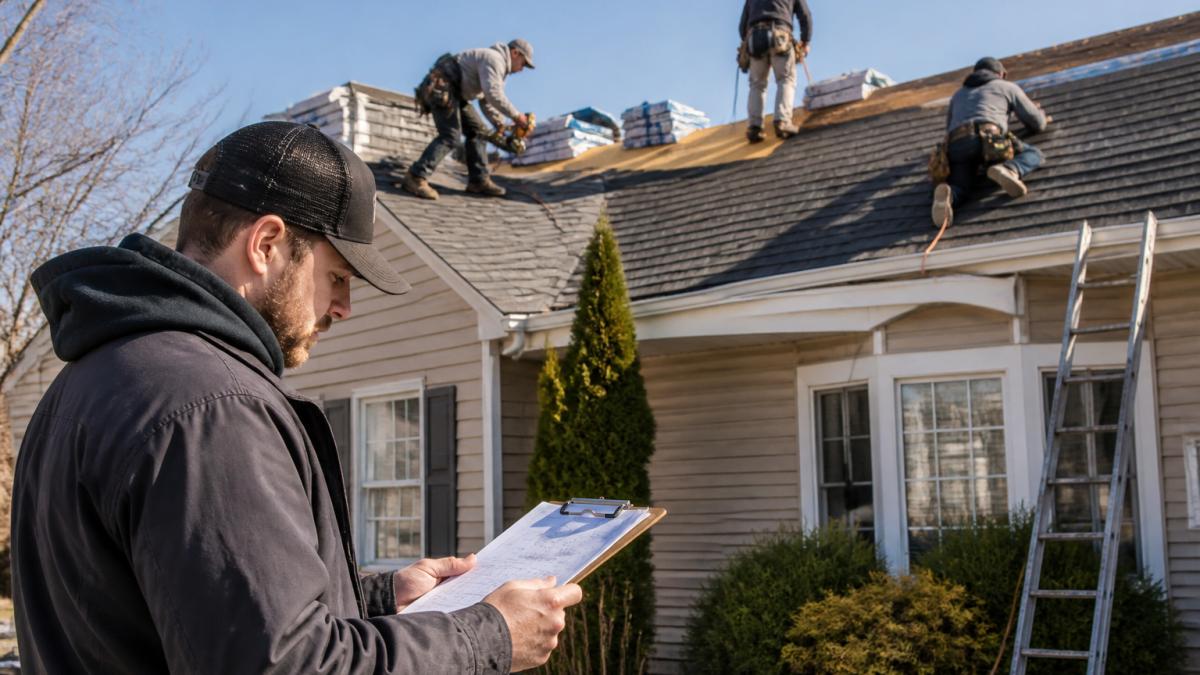
South Jersey homes face coastal storms, humid summers, and freeze-thaw winters that punish cheap workmanship.
A common mistake is hiring on the lowest bid without checking whether the contractor is licensed, insured, and certified by a shingle manufacturer. Those three checks eliminate most of the risk before you sign.
Roof Replacement Cost in New Jersey: What Homeowners Should Expect
Roof replacement cost in New Jersey varies widely by region, home size, and roof pitch, so any single number should be treated with caution. A 2026 South Jersey pricing guide from ECC Roofing's South Jersey roof cost guide estimates full replacements typically run between $13,500 and $21,500, though the guide notes the figure depends heavily on square footage and roof complexity.
That range is a starting point, not a quote. Roofers price by the "square", 100 square feet of roof surface, and the per-square installed price moves your total. Multiply by your roof's square count for a rough order of magnitude before tear-off, decking, and complexity adjustments.
Here is how the major variables shift the total:
| Variable | Typical Effect on Price | Why |
|---|---|---|
| Roof size (squares) | Scales the total almost linearly | More material, more labor hours, more disposal |
| Material tier | Three-tab < architectural < metal/synthetic | Higher cost per square and longer install time |
| Layers of old shingles | Each additional layer adds tear-off and dumpster cost | Disposal fees are charged per ton and per load |
| Roof pitch and stories | Steep or tall roofs add labor and safety setup | More staging, harness work, slower pace |
| Decking repair | Charged per sheet of plywood or OSB | Rot is common once old shingles come off |
| Penetrations and valleys | Each adds flashing labor and material | Chimneys, skylights, and dormers are detail-heavy |
To sanity-check any quote, ask for the square count, the per-square price, and the tear-off and disposal line separately. If they cannot produce those three numbers, the quote is not comparable. Get at least three written estimates and compare line items, not just totals.
Why South Jersey Pricing Differs From North Jersey
North Jersey pricing data does not translate cleanly to South Jersey. A 2026 cost report from Novalis Roofing & Siding's New Jersey cost report bases its findings on more than 300 signed projects, but its coverage is Northern New Jersey.
Two mechanisms drive most of the gap. Permit fees and inspection requirements are set municipality by municipality, so a quote bundling "permits" without naming the town hides a real variable. Coastal exposure near the shore also pushes homeowners toward higher wind-uplift-rated shingles and upgraded fastening schedules, raising material cost even when roof size is identical.
How to Compare Quotes Without Getting Anchored on Price
The lowest bid is usually low for a reason you cannot see yet: no permit pulled, no ice and water shield in valleys, reused flashing, no magnetic nail sweep, or a workmanship warranty measured in months rather than years. None of that shows up on a one-page estimate.
A more reliable method is to normalize every quote to the same scope: shingle brand and line, underlayment type, ice and water shield at eaves and valleys, ridge ventilation plan, decking per-sheet allowance, disposal method, and workmanship warranty length.
What Moves the Price After You Sign
Change orders are where budgets drift, most commonly decking rot found during tear-off and unexpected flashing repairs around chimneys or skylights. A fair contract states the per-sheet decking price and the hourly or per-item flashing rate up front, so the change order is a math problem rather than a negotiation. If a contractor will not commit to those rates in writing, expect the number to be invented later.
How to Get an Accurate Roof Replacement Estimate
An accurate roof replacement estimate comes from an on-site inspection, not a phone call or satellite photo. Any contractor willing to quote without climbing the roof or inspecting the attic is guessing, and you will pay for that guess later.
A proper roof replacement estimate lists tear-off, disposal, underlayment, flashing, ventilation, and labor as separate line items. If a quote lumps everything into one number, ask for a breakdown before comparing.
What a Complete Estimate Should Include
A complete estimate should spell out materials by brand and grade, the number of squares, warranty terms, and a projected timeline. Ask whether the price includes:
- Permit fees and inspections
- Decking replacement, and the per-sheet cost if rot is found
- Ice and water shield in valleys and eaves
- Ridge ventilation and drip edge
- Final cleanup and magnetic nail sweep
Research from Roofing Contractor's 2026 State of the Roofing Industry Report found that 78% of surveyed contractors expected sales volume to rise in 2026, which means good crews book out early. Get your estimate in writing and confirm the schedule before you commit.
| Estimate Element | Why It Matters | What to Ask |
|---|---|---|
| Material brand and grade | Determines lifespan and warranty eligibility | Which shingle line, and what wind rating? |
| Decking allowance | Rot is common under old roofs | What is the per-sheet cost if rot is found? |
| Ventilation plan | Prevents premature shingle failure | Will intake and ridge vents be balanced? |
| Warranty terms | Separates material from labor coverage | What does the workmanship warranty cover? |
Roofing Contractor Credentials and Insurance: What to Verify Before Signing
Verifying roofing contractor credentials and insurance takes about ten minutes and protects you from the most expensive mistakes in home improvement. Ask for the license number, certificate of insurance, and written proof of manufacturer certification before discussing pricing.
What most homeowners miss is that a certificate of insurance can expire mid-project. Call the insurer to confirm the policy is active and covers roofing work specifically, not just general contracting.
How to Actually Verify a License and Insurance
A credential check is a sequence, not a single glance at a document:
- Get the license number in writing on the estimate or contract, not just verbally.
- Confirm the entity name matches the name on the contract, the insurance certificate, and the permit application. Mismatches are a red flag.
- Call the insurer listed on the certificate and ask two questions: is the policy active today, and does it cover residential roofing work?
- Ask for the workers' comp carrier and policy number separately from general liability.
- Request the manufacturer certification in writing, a letter or portal listing, not a logo on a truck.
A contractor who cannot produce all five without hesitation is telling you something important.
Manufacturer Certifications: What They Actually Get You
Manufacturer certifications, tiered programs offered by shingle makers, matter for one concrete reason: many extended material warranties are only available when the installing contractor is certified at a specific tier. A non-certified installer can still install the same shingles, but the homeowner may be limited to the base material warranty.
Ask which certification tier the contractor holds and which warranty tiers that unlocks, then request the warranty document itself, not a summary. It will state the coverage length, exclusions, and whether the warranty is transferable if you sell the home.
Workmanship Warranty vs. Material Warranty: The Distinction That Matters
These are two separate warranties, and homeowners routinely conflate them.
| Warranty Type | Covers | Issued By | Typical Length |
|---|---|---|---|
| Material | Defects in the shingles themselves | The manufacturer | Long, often decades, prorated |
| Workmanship | Installation errors: nail placement, flashing, ventilation | The contractor | Short, often a few years |
Most roof failures in the first decade are workmanship failures, not material failures, so the shorter warranty does the real work.
A 2026 residential roofing outlook from Canopy Serve's residential roofing market outlook reports that 65% of homeowners are more likely to contact a roofer that publishes pricing on its website. Transparent pricing is a signal, but it should never replace credential checks.
Red Flags That Should End the Conversation
- No physical business address, only a phone number
- Pressure to sign the same day or a "today-only" discount
- Request for full payment or a large deposit upfront
- No written contract, or a contract with no scope, no warranty terms, and no payment schedule
- Door-to-door solicitation immediately after a storm with out-of-state plates
- Refusal to name the permit-pulling party
Any one of these alone is a caution. Two or more together is a reason to walk away, regardless of price.
Roof Replacement Timeline: How Long the Project Actually Takes
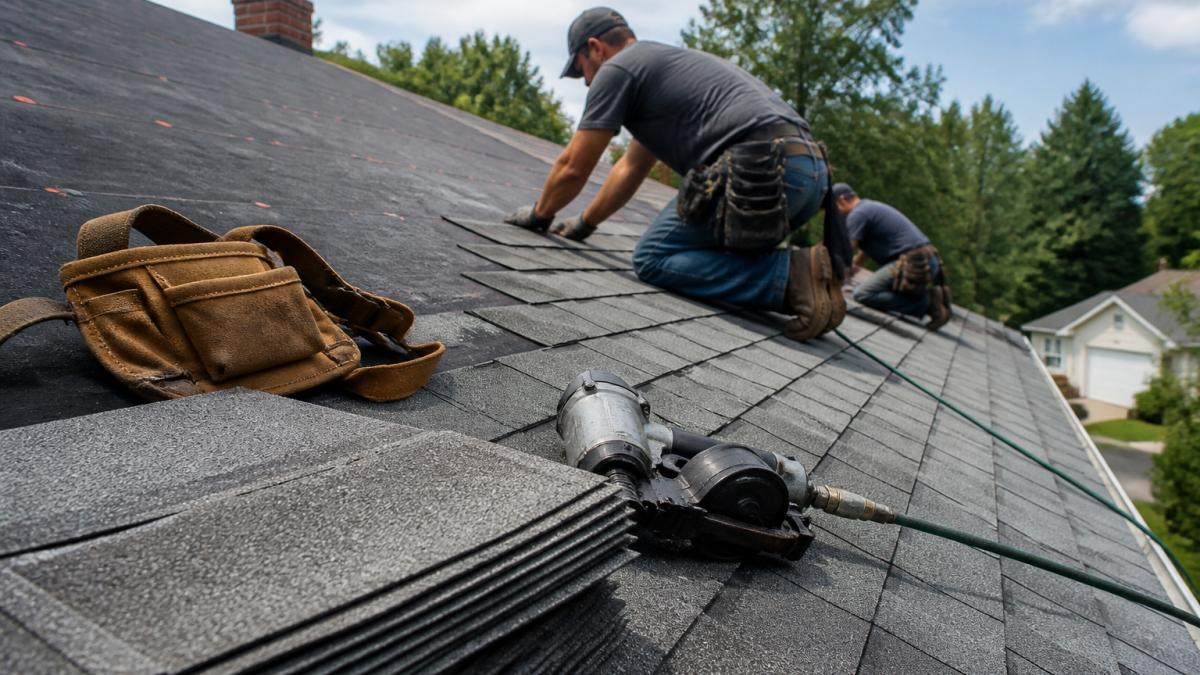
Most residential roof replacements take one to three days of active work, but the full roof replacement timeline from signed contract to final inspection often stretches to two or three weeks. Weather, permit approval, and material delivery drive most of the delay.
A typical sequence looks like this:
- Contract signed and deposit paid (day 1)
- Permit filed with the local municipality (1-5 business days)
- Materials delivered to the site (1-2 days before work)
- Tear-off and installation (1-3 days for most homes)
- Final inspection and cleanup (1-2 days after)
Complex roofs, steep pitches, or multiple layers of old shingles extend the installation window. Ask for a written schedule with weather contingency built in.
Questions to Ask Before Hiring Roof Replacement Contractors
Before signing with any roof replacement contractors, ask these questions and get the answers in writing. A contractor who dodges them is telling you something.
- Are you licensed and insured in New Jersey, and can I see proof today?
- Who is the manufacturer certification holder on your crew?
- What does your workmanship warranty cover, and for how long?
- Will you pull the permit, or am I responsible for that?
- How do you handle change orders if you find decking rot?
- Can you provide three local references from the past year?
- What is your payment schedule, and how much is due upfront?
J Curran Home Services handles exterior work across South Jersey, including roofing, siding, and gutter installation, and we are happy to walk you through what a fair estimate should look like for your home.
Frequently Asked Questions
What is the average cost of replacing a roof in New Jersey?
Roof replacement costs vary depending on home size and roof pitch. For a specific number, request a written roof replacement estimate from a local contractor who has inspected your roof.
How do I compare roof replacement contractors fairly?
Use the same criteria for every bid: licensing and insurance verification, manufacturer certifications, written scope of work, material and labor warranty terms, project timeline, and payment schedule. Ask each contractor the same questions and request references from similar South Jersey homes. A consistent comparison methodology prevents you from choosing on price alone when scopes differ. Get at least three written estimates before deciding.
What should a roof replacement estimate include?
A complete roof replacement estimate should list tear-off and disposal, underlayment and ice-and-water shield, asphalt shingles or other roofing materials by name and grade, flashing, ventilation, and any decking repair allowance. It should also state the project timeline, payment schedule, warranty terms, and whether permits are included. Vague line items like 'roofing services' leave room for change orders later, so ask for specifics before signing.
How long does a residential roof replacement take?
Most residential roof replacements take one to three days on site, weather permitting. The full roof replacement timeline is longer: inspection and estimate, material ordering, scheduling, installation, and final inspection can span two to four weeks. Steep pitches, multiple layers of old shingles, or decking repairs extend the schedule. Ask your contractor for a written timeline with milestones so you can plan around the work.
Replacing a roof is one of the largest single investments a homeowner makes, and the difference between a good outcome and a bad one usually comes down to who you hire, not what you buy. J Curran Home Services brings local South Jersey knowledge, a full range of exterior services including roofing, siding, and seamless gutters, and a commitment to no job being too big or small. Get an estimate from J Curran Home Services and protect your home with work you can trust.